Toolbox Talk: Ladder Last
With the frequency of ladder use in construction, implementing this ideology can be challenging, but considering that over 80% of falls in construction occur while using a ladder, using ladders as a last resort can be a lifesaving choice to make.
By eliminating ladder use, we not only reduce the risk of falls, but also that of other injuries and damages that come along with ladders. In addition to the weight and handling associated with carrying a ladder, we also have to consider the ascend/descend with tools and equipment, as well as a limited working and staging area for equipment.
Things to consider when planning for work that may involve ladders:
1. Preplan to reduce or eliminate the need for ladders. Preplanning should occur well before the work begins. Can we engineer out the need to use ladders or even work at elevated heights?
2. When given the choice, use stairs or elevators to access a work area, rather than climbing a ladder.
3. Consider safer alternatives to do work at elevated heights. Can an aerial, boom, or personal lift be used? Are temporary stairs available?
4. When you must use a ladder ensure that it is set up correctly;
An extension ladder must extend 3’ above the roof edge, be tied off at the top or bottom, or both, and be at the correct angle from the building.
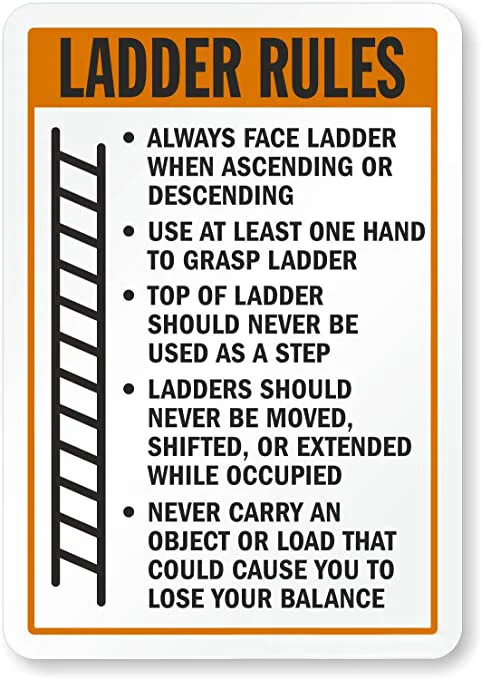
A step ladder must be opened completely and be used on a level surface, so the ladder will not “walk”. The top 2 levels shall not be used to climb on.
Use fall protection when exposed to a leading edge while on a ladder.