
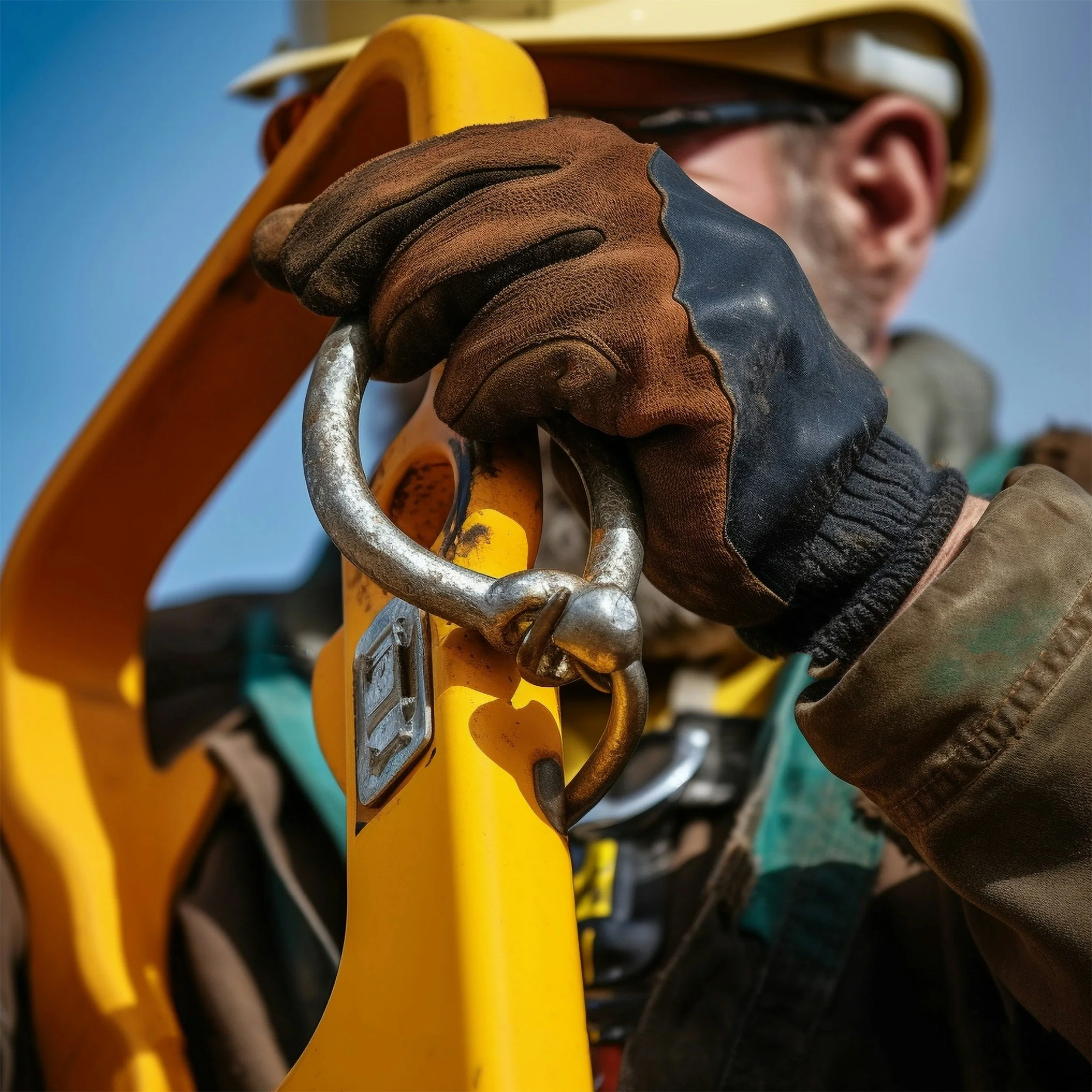
Toolbox Talk: Rigging Safety - General Rigging Guidelines
Properly rigging loads requires attention to details. Rigging operators must know the capabilities of lifting equipment, types of hitches that can be used and composition of loads. Not knowing these details can cause a serious accident.
Points to Remember:
1. Lifting Equipment – such as cranes, must regularly be inspected by a competent person before each lift. If any damaged components are found, equipment must be removed from service and repaired.
2. The hitch – Hitches affect the load ratings of slings. An experienced rigging operator will understand the limitations of different hitches. If there is any uncertainty about hitch’s load rating, check the manufacturer’s instructions. An insufficient load rating can cause a lift to fail.
3. Load – A load’s weight is critical, and a rigging operator never should try to guess a load’s weight. If there is uncertainty about a load’s weight, a rigging operator should check with the supplier or distributor. Crane or roof hoist operators must be able to read and understand lifting equipment load capacity charts. Slings can damage loads, and loads can damage slings. As a result, a rigging operator may need to use protective padding, especially for loads of soft material, such as insulation boards and roofing felts, that are not an a pallet. Old nylon slings that have been removed from service can be used as padding. To use and old sling, cut enough of an old sling to shield the contact area between the load and lifting sling and place it between the two before making the lift.
4. Adjustments – A rigging operator should test a load by lifting it slightly off the ground. If the load or crane shifts, the operator must readjust the load.
