
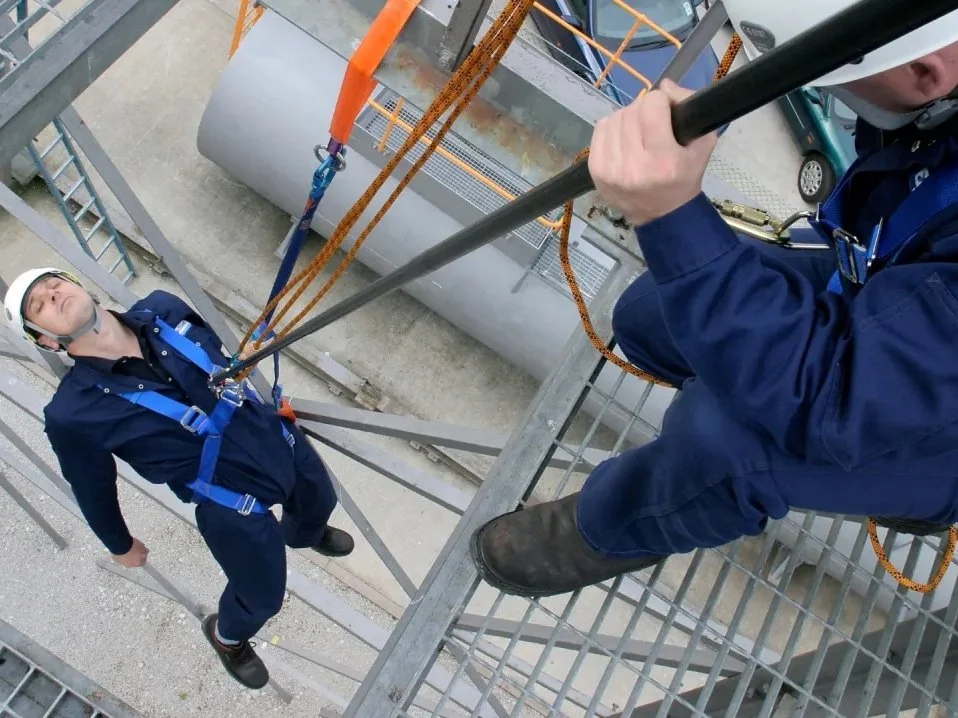
Fall Protection - Suspension Trauma
In the event of a fall, a person is thankful and relieved to know their fall protection saved them from severe injury or death. Shortly after, the fall victim may be concerned because hanging in a harness is becoming painful or uncomfortable. The risk of suspension trauma increases as time in the harness increases; therefore, it is imperative that rescue begins with high urgency.
Suspension trauma is an effect which occurs when the human body is held upright without any movement for a period of time.
Symptoms - The onset of symptoms occurs within minutes of free hanging. This is why rescue must be conducted immediately and hopefully take no more than 20 minutes for the best chance of survival. Typical symptoms are sweating, shortness of breath, blurred vision, dizziness, nausea, low blood pressure and numbness of the legs. Eventually it leads to fainting, which may result in death due to oxygen deprivation of the brain.
Treatment - If someone is stranded in a harness and is conscious, uninjured, and has something to kick against or stand on, it is helpful for them to use their leg muscles by pushing against it every so often, to keep the blood pumping back to the torso. If the person is stranded in mid-air or is exhausted, keeping the legs moving may delay the effects of suspension trauma.
When rescuing a victim, it is important to let the blood flow to the brain and heart. A suspended victim is more likely to be injured by not raising their legs when rescuing.
Points to Remember:
Suspension trauma is a real hazard to individuals who fall into their harnesses.
To reduce the chance of suspension trauma, keep legs moving to allow blood flow.
How many minutes after a fall before suspension trauma symptoms occur?
Do we have the capabilities to rescue a person within minutes?
Do we have a rescue plan for this jobsite?
