
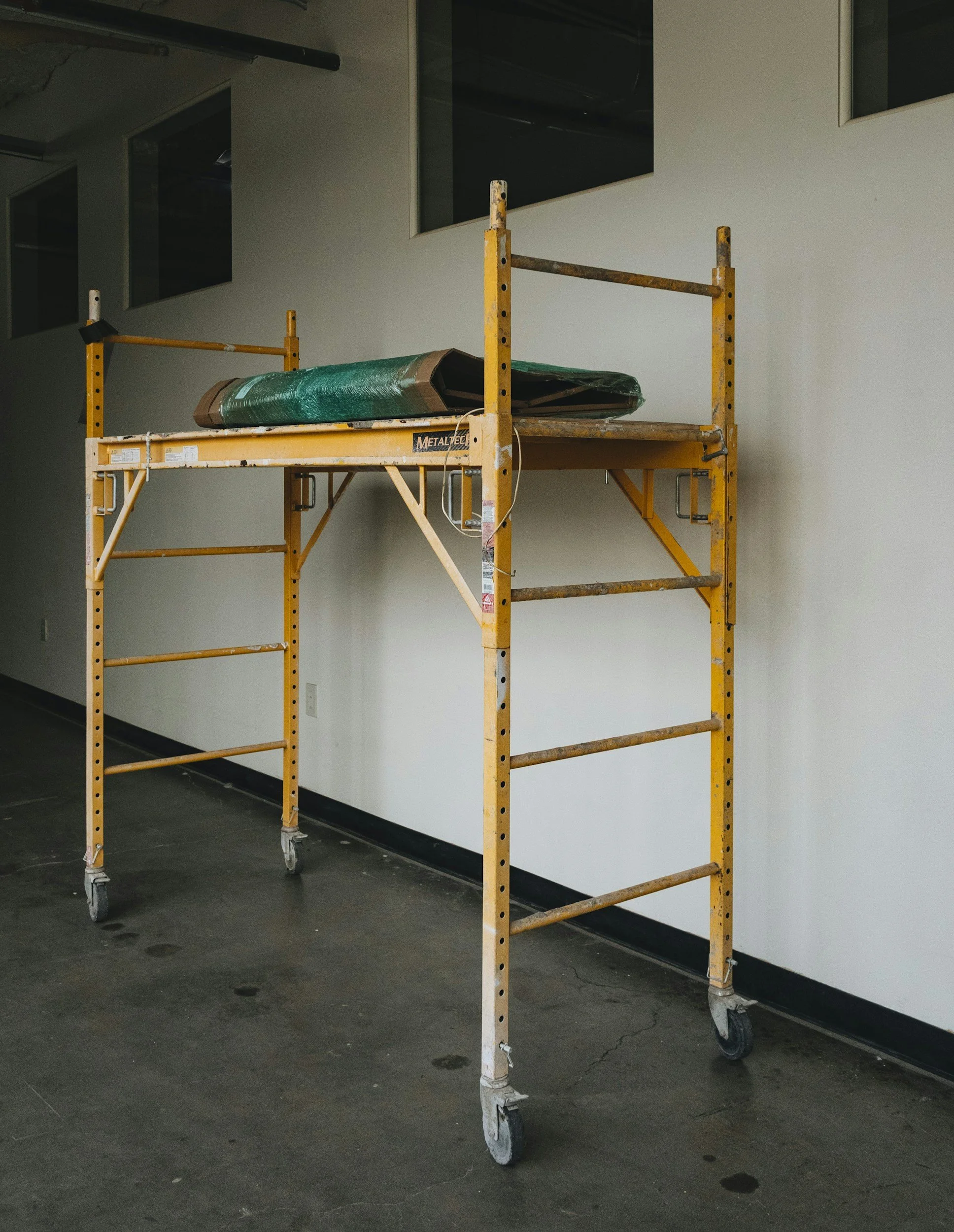
Toolbox Talk: Baker’s Scaffolds
Baker’s scaffolds are useful tools to reach the upper walls and ceilings on building interiors. However, because they are light weight, narrow, and have wheels, they are often not as stable and may not be rated for as heavy a load as a traditional frame scaffold.
Check the manufacturer’s instructions. Most, if not all, require outriggers to stabilize the scaffold when a second level or set of frames is added. Outriggers can make it more difficult to reach the surface you intended, and the scaffold base is too wide to fit through doors when outriggers are attached. Do not be tempted to work without outriggers!
Points to Remember:
1. When building the scaffolding, ensure you have a clean, flat, solid surface for a good foundation. Holes and bumps in the floor can cause balance issues.
2. Make sure you have all the pins and locks. Missing just a few can really affect the stability of the equipment. Baker’s scaffolds often are not designed with cross braces. Every pin and lock are essential for stability.
3. Take note of maximum loads and climbing with heavy materials, or side loading the scaffold can make it unstable and cause tip-over.
4. Like all scaffold, you must have fall protection when working at or over a 10-foot level (OSHA regulation). Most manufacturers make and sell guardrails for their systems.
5. Most manufacturers do not allow you to ride on a baker scaffold while it is being moved. So, no “surfing” allowed.
